Pre-Imperial Foundations (c. 800–1400)
Ìpìlẹ̀ Ṣáájú Ìjọba Ọba Nlá
The pre-imperial era marks the formation of Yoruba political identity from dispersed settlements into centralized sacred authority. Between the ninth and fourteenth centuries, increasing settlement density, metallurgical development, and the rise of Ilé-Ifẹ̀ as a ritual-political center laid the institutional foundations for later regional kingdoms. This period concludes as successor polities begin asserting autonomous authority across Yorubaland.
Archaeological Chronology & Settlement Growth (c. 800–1200)
Early Phase
c. 800–1000
Expanding settlement clusters and early iron production across southwestern Nigeria
Urban Phase
c. 1000–1300
Consolidation at Ilé-Ifẹ̀; concentrated craft production and emerging institutional authority
Integration Phase
c. 1200–1400
Inter-polity networks, diffusion of political models, and transition to regional kingdoms
The reconstruction of the pre-imperial period depends primarily on archaeological evidence. Unlike later centuries, this era lacks written documentation from within Yorubaland. As a result, settlement patterns, material remains, and radiocarbon dating form the core basis for historical interpretation . Between the ninth and twelfth centuries CE, archaeological findings indicate sustained demographic growth, expanding settlement clusters, and increasing economic coordination across southwestern Nigeria . These developments do not demonstrate the existence of centralized kingdoms at this stage, but they do reveal structural transformation. Communities were becoming larger, more stable, and more socially differentiated. This section examines the material evidence that supports that conclusion and considers how historians interpret its implications for early political organization .
Expansion of clustered settlements across southwestern Nigeria
Archaeological research shows that between the ninth and twelfth centuries CE, communities in southwestern Nigeria became larger and more permanent . Instead of small, scattered villages that appeared and disappeared quickly, excavations reveal settlements that were rebuilt and expanded over generations . This suggests stable populations and a degree of continuity in social organization. Why does this matter historically? Larger settlements require coordination. People must manage land, resolve disputes, organize labor, and maintain shared spaces. Even without written records, the physical evidence indicates that communities were developing systems of authority capable of maintaining order across growing populations . Environmental conditions likely contributed to this growth. The forest–savanna region offered both fertile farmland and access to forest resources, which made long-term settlement practical . While historians cannot determine exact population numbers, the archaeological record makes it clear that the region was not sparsely inhabited. By c. 1200 CE, several areas show sustained demographic presence consistent with increasingly complex social life . These developments do not mean that centralized kingdoms already existed. However, they demonstrate that the foundations for later political institutions were already forming during this period .
Radiocarbon dating and material remains
The main tool for establishing the timeline of this era is radiocarbon dating. Charcoal samples and other materials from excavated sites have produced dates clustered between c. 800 and 1200 CE . These findings confirm that settlement growth and technological activity occurred steadily across several centuries. Radiocarbon dating, however, provides ranges rather than exact dates. In some cases, older materials were reused in later constructions, which can complicate interpretation . For this reason, historians avoid linking specific archaeological layers too directly to named rulers or events described in later oral traditions . Even with these limits, the overall pattern is clear. Southwestern Nigeria experienced sustained growth and organization long before the emergence of the well-known kingdoms of the fifteenth and sixteenth centuries . The evidence supports gradual development rather than sudden political transformation.
Iron Technology & Economic Coordination
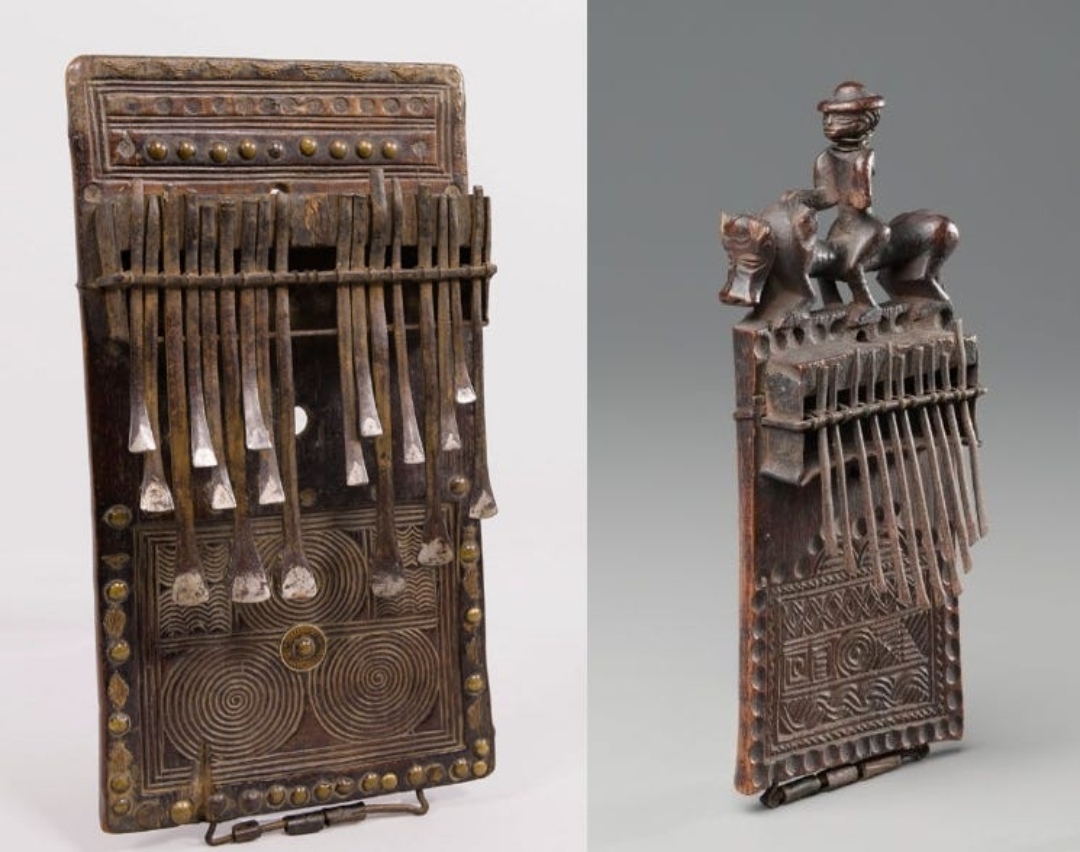
Iron production played an important role in this transformation. Excavations across the region have uncovered furnaces, slag, and finished iron tools . These tools made farming more efficient, especially in clearing forested land, which likely supported population growth and more permanent settlement . Ironworking also required planning and cooperation. Smelting iron demands access to ore, charcoal production, and skilled labor. It is unlikely that such activity occurred entirely at the level of isolated households . Instead, the evidence suggests networks of production and distribution that connected communities economically. Scholars are careful not to treat iron technology as proof of state formation . Many societies produce iron without centralized governments. Still, when combined with settlement growth and signs of hierarchy, iron production strengthens the case that southwestern Nigeria was becoming more economically and socially organized during this period .
Physical Remains
Furnaces
Smelting furnace remains and slag deposits recovered across southwestern Nigeria confirm organized iron production
Agricultural Impact
Iron Tools
Finished iron implements enabled more efficient land clearance and farming, supporting sustained population growth
Economic Role
Distribution
Evidence of exchange networks suggests iron moved between communities, requiring coordination beyond household-level production
Urban Consolidation at Ilé-Ifẹ̀ (c. 1000–1300)
By the early second millennium CE, Ilé-Ifẹ̀ had developed into one of the most prominent urban centers in southwestern Nigeria . Archaeological evidence from the site indicates sustained occupation, spatial organization, and concentration of skilled production. These features distinguish Ifẹ̀ from surrounding settlements and suggest that it functioned as more than a large village. It appears to have operated as a center where political authority, ritual leadership, and economic coordination converged. Understanding Ifẹ̀’s consolidation is essential for interpreting the pre-imperial period as a whole. The scale of activity visible in the archaeological record supports the view that institutional authority was becoming centralized in at least one major urban node by the eleventh and twelfth centuries . Although historians continue to debate the precise structure of governance at Ifẹ̀ during this time, there is broad agreement that the site played a critical role in shaping later political models across Yorubaland .
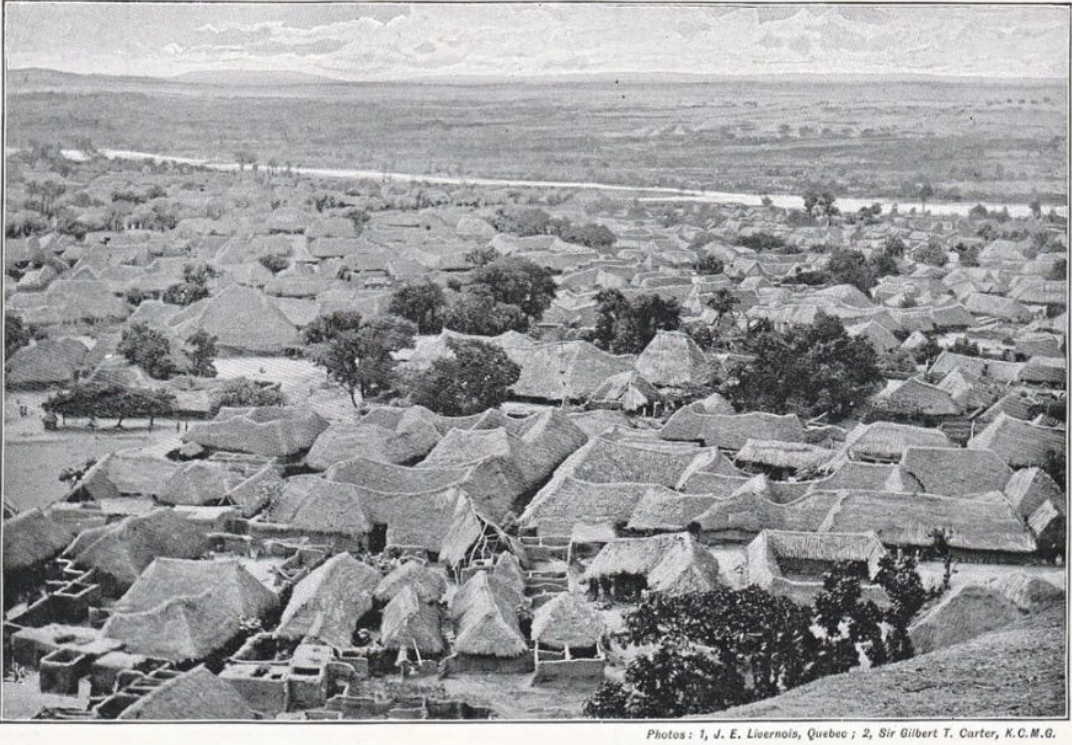
Growth of an organized urban center
By the early second millennium CE, Ilé-Ifẹ̀ had become one of the most significant settlement centers in southwestern Nigeria . Archaeological findings show evidence of organized spatial layout, dense occupation zones, and concentrated craft activity. These features distinguish Ifẹ̀ from smaller surrounding settlements. Urban growth at Ifẹ̀ does not simply mean population increase. It suggests coordination at a broader level. Larger settlements require leadership structures capable of organizing labor, maintaining order, and managing shared religious and political spaces . The material record, including evidence of specialized production and centralized compounds, points toward the presence of institutional authority . Scholars differ on the precise scale of the city during this period. However, most agree that by c. 1100–1300 CE, Ilé-Ifẹ̀ functioned as a central node in the region, with influence extending beyond its immediate boundaries .
Ifẹ̀ and Regional Legitimacy
Key Term
“Odùduwà”
Later Yoruba traditions consistently associate Ilé-Ifẹ̀ with political origin and legitimacy . While historians approach these traditions critically, their widespread presence across Yorubaland suggests that Ifẹ̀ held recognized symbolic authority. From a historical perspective, the key issue is not whether every detail of origin narratives can be verified. Rather, it is that Ifẹ̀ functioned as a reference point for political legitimacy in subsequent centuries . By the fourteenth century, this symbolic authority appears to have been widely recognized across emerging Yoruba polities. Even where direct political control cannot be demonstrated archaeologically, the diffusion of dynastic narratives linking rulers to Ilé-Ifẹ̀ suggests that its prestige operated as a shared standard of legitimacy . In this sense, Ifẹ̀’s importance during the pre-imperial era lies not only in its urban scale but in its role as a source of institutional models that later kingdoms adapted to their own contexts .
Political Integration & Early State Formation (c. 1100–1350)
The centuries following Ilé-Ifẹ̀’s consolidation show evidence of broader political integration across southwestern Nigeria. Settlement growth and emerging hierarchies suggest that leadership roles were becoming increasingly institutionalized . Rather than remaining confined to lineage-based authority, governance structures began to extend across defined territories. This shift did not occur abruptly. It reflects gradual developments in population stability, economic coordination, and shared legitimacy frameworks. By the thirteenth and fourteenth centuries, some Yoruba centers appear to have exercised authority over wider regions, laying the groundwork for the emergence of autonomous monarchies in the subsequent period . Examining this transition helps clarify how early political structures evolved into more durable territorial systems.
Sacred Kingship as Political Structure
Sacred kingship is often treated primarily as a religious concept, but historically it functioned as a political institution . Associating rulership with sacred authority provided a stable framework for succession and governance. It linked political leadership to ritual legitimacy, reinforcing social cohesion in expanding communities. During the pre-imperial period, sacred authority appears to have been concentrated at Ilé-Ifẹ̀, where leadership roles combined ritual and political functions . This model offered a durable template for governance. As political authority diffused outward, later rulers could draw upon this framework to justify their own sovereignty. From a historical standpoint, the significance of sacred kingship lies in its institutional effect. It created continuity across generations and provided a recognized structure for authority that could be reproduced in different regions . This institutional continuity helps explain how multiple successor polities emerged while maintaining shared political principles.
Historical Note
“Sacred kingship provided more than ritual legitimacy — it created institutional continuity. By linking political authority to sacred precedent, governance structures could be reproduced and adapted across different regions over successive generations.”
Key Term
“Ọba”
Interpreting Early Political Structures
Historians differ in how they categorize the political systems of this era. Some describe the period as representing early state formation, pointing to territorial rule and institutionalized leadership . Others prefer terms such as complex chiefdom or early urban polity, emphasizing that evidence for formal bureaucratic administration remains limited . Rather than imposing a fixed label, it is more accurate to describe the pre-imperial centuries as a phase of political consolidation. Authority became more structured, settlements more permanent, and leadership more institutionalized. These changes created the conditions under which fully articulated regional kingdoms would later emerge .
Interpretation A
Early State
Territorial rule and institutionalized leadership are treated as markers of early state formation by c. 1200 CE
Interpretation B
Complex Chiefdom
Others prefer terms that acknowledge developed hierarchy without assuming formal bureaucratic administration
Scholarly Consensus
Consolidation
Most agree that political authority became more structured and territorially defined during the twelfth and thirteenth centuries
Inter-Polity Networks & Regional Interaction (c. 1100–1400)
Emerging political centers in southwestern Nigeria developed within a broader regional context. Archaeological and historical evidence suggests that communities were connected through trade routes and patterns of exchange that extended beyond local boundaries . These interactions likely facilitated not only economic activity but also the circulation of institutional models and ideas about authority. The presence of exchange networks helps explain how similar political principles appear across later Yoruba polities. Shared frameworks of legitimacy and leadership may have spread through sustained contact rather than independent invention . Understanding these networks provides important context for the political transformations that followed in the fourteenth century.
Exchange Networks and Regional Contact
Material Exchange
Trade Goods
Iron tools, agricultural products, and crafted items connected Yoruba settlements to Nupe and Benin across regional routes
Political Exchange
Legitimacy
Shared frameworks of authority and dynastic narratives circulated through sustained inter-regional contact
Institutional Exchange
Models
Governance structures, ritual forms, and political ideas spread across networks, enabling a shared institutional language
Archaeological and historical evidence suggests that emerging Yoruba centers were not isolated. Trade routes connected communities across southwestern Nigeria and extended toward neighboring regions such as Nupe and Benin . The exchange of goods likely included agricultural products, iron tools, and crafted items. These networks had political implications. Trade requires agreements, recognition of authority, and mechanisms for resolving disputes across communities. Even without written treaties, repeated exchange fosters shared norms and expectations . The development of such networks indicates that emerging polities operated within a broader regional system.
Diffusion of Political Models
Beyond material exchange, ideas about leadership and legitimacy appear to have circulated across the region. Later traditions describing dynastic connections to Ilé-Ifẹ̀ suggest that political models were transmitted and adapted by emerging rulers . From a historical perspective, this diffusion matters because it helps explain how multiple autonomous polities could share similar institutional structures. Rather than developing independently in isolation, early Yoruba centers participated in networks that allowed political ideas to spread. By the fourteenth century, this shared institutional language contributed to the recognizable features of later Yoruba kingdoms .
Network Effect
“By the fourteenth century, shared institutional frameworks — transmitted through trade, dynastic migration, and symbolic authority — gave multiple autonomous Yoruba polities a common political vocabulary rooted in Ilé-Ifẹ̀.”
The Threshold of Regional Kingdoms (c. 1300–1400)
By the late fourteenth century, the political landscape of southwestern Nigeria was changing. Evidence suggests that authority was no longer concentrated primarily in Ilé-Ifẹ̀ but had begun to diffuse into multiple emerging centers . This shift marks a structural transition rather than a sudden rupture. The institutional patterns developed during the preceding centuries were being adapted and replicated across different regions. The emergence of autonomous polities at this stage represents the culmination of processes already underway: settlement growth, institutional consolidation, and the diffusion of legitimacy models. By c. 1400, conditions were in place for the development of distinct regional monarchies that define the Classical Age of Kingdoms. Recognizing this transition clarifies why the pre-imperial period is best understood as foundational rather than preliminary .
Emergence of Autonomous Polities
By the late fourteenth century, evidence suggests that political authority was no longer concentrated primarily in a single urban center. Instead, multiple regions began to assert autonomous rule . Traditions of dynastic migration and foundation narratives reflect this shift, even if the precise historical details remain debated . Archaeological indicators of regional settlement hierarchies and differentiated authority support the interpretation that sovereignty was becoming distributed across emerging kingdoms . Authority appears increasingly territorial, tied to specific centers rather than to a single overarching nucleus.
Demographic
Growth
Centuries of population expansion created stable settlement centers capable of sustaining autonomous territorial rule
Institutional
Authority
Formalized leadership roles and sacred kingship models provided replicable governance frameworks for emerging polities
Ideological
Legitimacy
Dynastic narratives linking rulers to Ilé-Ifẹ̀ supplied the symbolic basis for asserting independent sovereignty
Transition to the Classical Age
This transition marks the end of the pre-imperial era. The centuries between c. 800 and c. 1400 established the demographic, institutional, and legitimizing foundations of Yoruba political life. By the beginning of the fifteenth century, conditions were in place for the development of distinct regional monarchies with stable territorial authority. The Classical Age of Kingdoms that follows is therefore not a sudden departure but a continuation and expansion of processes already underway during the pre-imperial centuries . The foundational structures of settlement growth, institutional authority, and shared legitimacy formed the basis upon which later political systems were built.
Foundational Period
“The pre-imperial centuries did not merely precede Yoruba civilization — they constituted its foundation. Settlement growth, institutional authority, and shared legitimacy frameworks created the conditions upon which later regional kingdoms were built.”
References
- [2]
Frank Willett, Ife in the History of West African Sculpture (London: Thames & Hudson, 1967).
- [3]
Peter Garlake, Early Art and Architecture of Africa (Oxford: Oxford University Press, 2002).
- [4]
J. D. Y. Peel, Religious Encounter and the Making of the Yoruba (Bloomington: Indiana University Press, 2000), esp. methodological discussions on Yoruba historical formation and sources.
- [5]
Toyin Falola, Yoruba Gurus: Indigenous Production of Knowledge in Africa (Trenton, NJ: Africa World Press, 1999).
- [6]
S. O. Biobaku (ed.), Sources of Yoruba History (Oxford: Clarendon Press, 1973).
- [7]
Toyin Falola and Matthew M. Heaton, A History of Nigeria (Cambridge: Cambridge University Press, 2008).
- [8]
Akinwumi Ogundiran, “Classic Ilé-Ifẹ̀: A Consideration of Scale in the Archaeology of Early Yorùbá Urbanism, AD 1000–1400,” Journal of Urban Archaeology 7(5) (2023): 77–94.
- [9]
Suzanne Preston Blier, Art and Risk in Ancient Yoruba: Ife History, Power, and Identity, c. 1300 (Cambridge: Cambridge University Press, 2015).
Social Hierarchy and Emerging Political Authority
Material evidence from several sites suggests differences in status among inhabitants. Variations in compound size, artifact quality, and spatial organization indicate that some individuals or groups held positions of greater authority . These patterns are consistent with developing forms of leadership. The debate among historians concerns how far this leadership had evolved by c. 1200 CE. Some argue that early forms of territorial rule were already emerging . Others suggest that the evidence better fits complex but decentralized systems of authority . What is generally agreed upon is that by the twelfth and thirteenth centuries, southwestern Nigeria was no longer composed solely of loosely connected kinship groups. Structured communities, recognized leaders, and organized production systems were present. These developments created the conditions under which later regional kingdoms could emerge .