History & Civilizations
Ìtàn & Ilú
From the sacred origins of Ile-Ife through the mighty Oyo Empire, the pre-colonial city-states, the catastrophe of the transatlantic slave trade, colonial resistance, and the vibrant global diaspora — the full temporal arc of Yoruba civilisation.
History & Civilizations Entries
Table of Contents
Pre-Imperial Foundations (c. 800–1400)
The formative centuries of Yoruba political identity, early settlements, and the emergence of Ilé-Ifẹ̀ as a sacred and political nucleus.
The Classical Age of Kingdoms (c. 1400–1700)
The consolidation of regional polities, growth of successor kingdoms, and the development of governance and diplomacy.
The Ọ̀yọ́ Imperial System (c. 1500–1830s)
The rise, structure, expansion, and eventual fragmentation of the Ọ̀yọ́ Empire.
The 19th-Century Wars & Political Reordering (c. 1800–1890s)
Civil wars, military city-states, population movement, and the restructuring of regional power.
Atlantic Disruption & Forced Migration (c. 1500–1900)
The slave trade era, demographic upheaval, coastal transformations, and returnee communities.
Colonial Conquest & Administrative Transformation (c. 1860–1960)
British annexation, indirect rule, political restructuring, and modern administrative boundaries.
Independence, Federalism & Regional Politics (1960–1979)
Post-independence regional politics, state creation, coups, and federal negotiations.
Military Rule, Urbanization & Economic Shifts (1979–1999)
Military governance, oil-era expansion, urban growth, and institutional centralization.
The Fourth Republic & Contemporary Governance (1999–Present)
Democratic politics, party realignments, civic movements, and modern governance challenges.
Lagos: The Yoruba Metropolis (1800s–Present)
The rise of Lagos as economic powerhouse, migration center, and political-cultural force.
Modern Diaspora & Transnational Networks (1900s–Present)
Modern migration, global identity formation, remittance economies, and digital networks.
Global Yoruba Identity
The modern global Yoruba community, cultural festivals, language preservation efforts, and the digital renaissance of Yoruba identity.
Pre-Colonial City-States
The network of interconnected Yoruba kingdoms including Ijebu, Ekiti, Ondo, and Ijesa, each with distinct political and cultural identities.
The Oyo Empire
One of the most powerful West African states, the Oyo Empire dominated the region through military prowess and sophisticated political structures.
The Kingdom of Ife
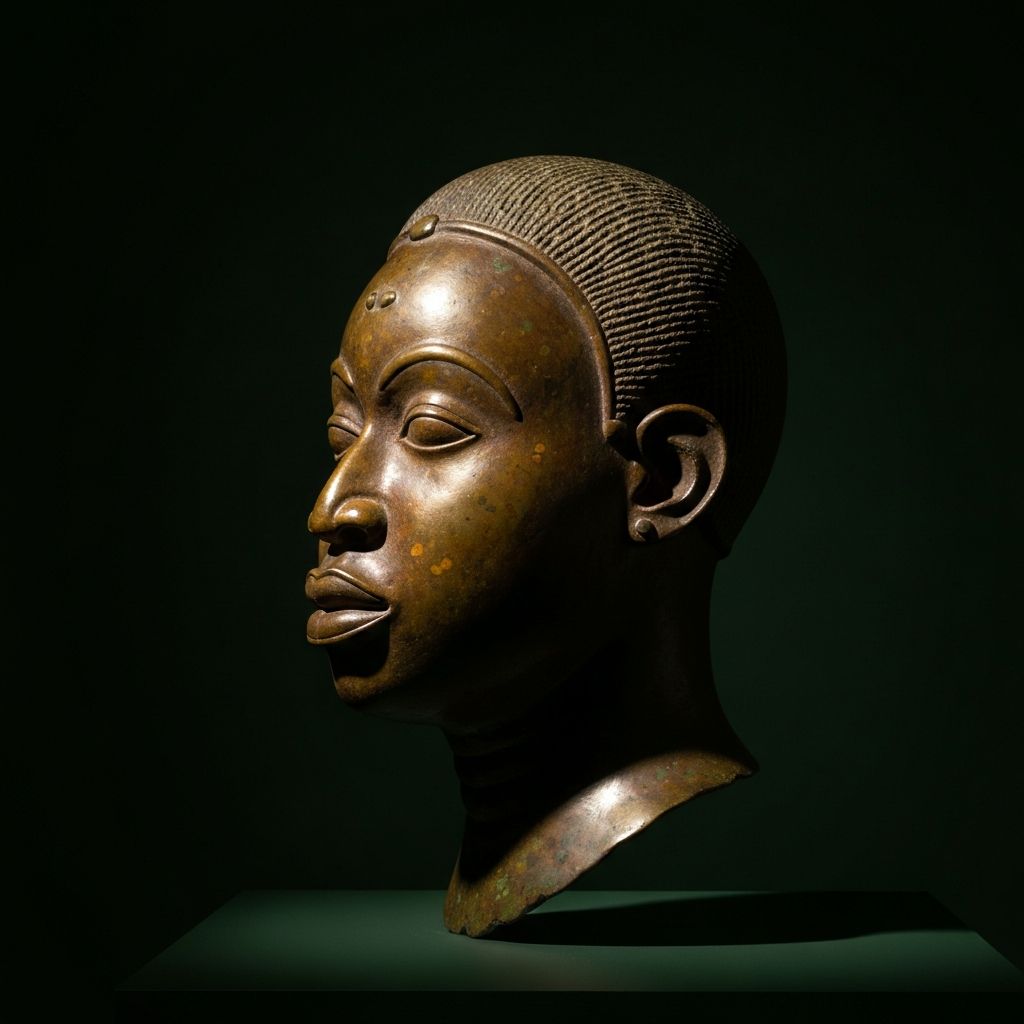
The ancient sacred city considered the spiritual homeland and cradle of the Yoruba people, renowned for its extraordinary bronze and terracotta artworks.
Colonial Era & Resistance
The impact of British colonialism on Yoruba political structures, the rise of nationalism, and the struggle for independence.
Trans-Atlantic Slave Trade
The forced migration that carried millions of Yoruba people across the Atlantic, spreading their cultural practices to the Americas and Caribbean.
Yoruba in Brazil
The deep Yoruba influence on Brazilian culture through Candomblé, cuisine, music, and the Nagô tradition in Bahia.
Cuban Lucumí
The preservation of Yoruba religious practices in Cuba through Santería (Regla de Ocha), one of the most complete survivals of African religion in the Americas.